Is an AI receptionist worth it for a small business? Prices, a real 30-day test and the legal catches
AI receptionists cost $29-299 a month, roughly 5-10x less per minute than a human answering service. A real 30-day test, what callers think, the failure modes, the rules on recording and disclosure, and a checklist to decide whether your business should use one.
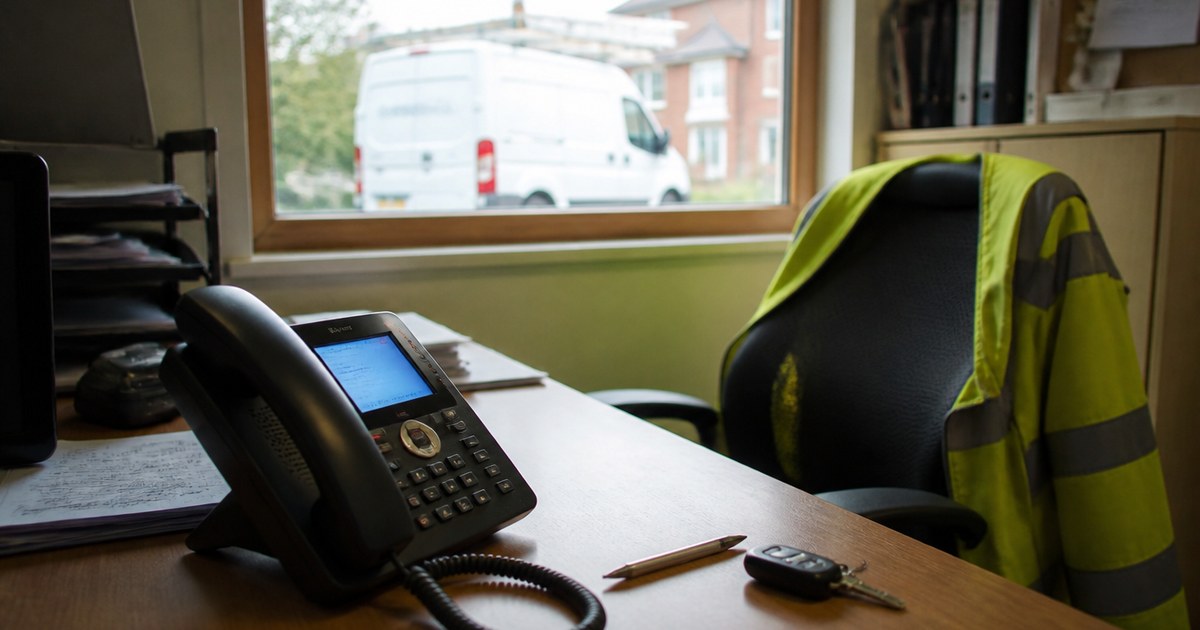
Is an AI receptionist worth it for a small business?
By Andrej Ruckij · November 5, 2026
TL;DR: Yes, if you miss calls you’d otherwise win, and only as a backstop rather than a replacement. Per-minute AI receptionist plans run about $0.15-0.50 a minute against $3.45-5.00 for a live answering service, and a $149 plan is under 5% of a receptionist’s wage. In the most detailed 30-day test I found, a UK boiler-repair firm turned 214 calls it would have missed into 21 paid jobs (£3,465) for about £172, but 41 callers hung up within ten seconds of realising it wasn’t a person and two emergencies were missed. Most customers say they prefer a human, so tell callers it’s an AI, give them a way to reach a person, and read the transcripts daily at first.
What an AI receptionist actually does
It answers your business line when you can’t, talks to the caller in a natural voice, and does one of a few jobs: books an appointment into your calendar, takes a message with the details you need, answers common questions (hours, prices, service area) from information you give it, or transfers the call to you. Most connect to a calendar and to Zapier, and some to field-service or CRM software.
It isn’t a front desk. It doesn’t greet walk-ins, take payments at the counter or calm an angry patient in the waiting room.
How much does an AI receptionist cost?
Prices from each vendor’s own pricing page, read on November 5, 2026:
| Product | Price | Billed by | Integrations | Suits |
|---|---|---|---|---|
| Dialzara | from $29/month (60 min), $99 (220 min) | minute, then $0.45-0.48/min | ”CRM and calendar” (none named) | lowest entry price |
| Rosie | $49/month (250 min), $149 (1,000 min) | minute | Zapier; calendar booking from the $149 plan | trades and home services |
| RingCentral AI Receptionist | from $49/month (100 min), then $0.50/min | minute | Salesforce, HubSpot, Zoho, Google and Outlook calendars | businesses already on RingCentral |
| Goodcall | $79/month (100 unique callers), $129, $299 | unique caller per month, not minutes | Zapier, external tools by plan | callers who ring back often |
| My AI Front Desk | $99/month or $79 billed annually (200 min) | minute, ~$0.25 extra | Zapier | solo operators |
| Smith.ai AI Receptionist | free (25 calls), $150/month at $2.00/call, $500 at $1.67/call | call | Clio, Calendly, Zapier | law firms, low volume |
| Broccoli AI | no public price | — | ServiceTitan, Housecall Pro, Salesforce, Google LSA | home-services firms doing $2-10M+ a year |
What the alternatives cost:
- A human answering service: Ruby charges $250 a month for 50 minutes and $1,725 for 500, which works out to about $3.45-5.00 a minute. Smith.ai’s human receptionists start at $300 for 30 calls, with overage at $11.50 a call.
- An in-house receptionist: the US median is $18.27 an hour, $38,010 a year, before benefits and taxes (O*NET, BLS 2025 data).
So per minute, the AI plans in the table run about $0.15-0.50 against $3.45-5.00 for a live answering service. A live service is a different product (real people, often better with upset callers), but on cost alone the AI wins easily. The harder questions are how many calls you miss and how callers react.
How many calls are you actually missing?
This is the number that decides whether it’s worth it, and most of the statistics floating around are weak. The famous “62% of calls to small businesses go unanswered” comes from a 2016 study of 85 businesses over 30 days, and it counts voicemail as unanswered. Nextiva rates it “directional only; small sample, old, and widely misdated” (Nextiva).
A better current number: across 70 million calls in 10 industries, Invoca found 56% of callers reached a person (Invoca, 2026). Those are businesses running paid marketing, so probably better at answering than average. In a CallRail survey of 1,000 US consumers, 78% said they have abandoned a business after an unanswered call (CallRail). CallRail sells call software and this is what people say, not what they do.
Your own phone log is a better guide than any of these, and the steps at the end show how to read it.
What happened in a real 30-day test
The most useful account I found is a UK boiler-repair firm in Kent that put an AI receptionist on calls it would otherwise have missed, for 30 days (Lilach Bullock; the product isn’t named):
- 214 calls handled that would have gone unanswered.
- 89 turned into bookings or callback requests, and 21 became paid jobs averaging £165, £3,465 in total.
- The AI cost about £172 for the month.
- 41 callers hung up within ten seconds of learning it wasn’t a human. The rest of the calls were duplicates, spam, wrong numbers or suppliers.
- Two real emergency callouts were missed, because the owner only read the transcripts weekly.
- Hang-ups dropped after they added a “speak to a person” option.
That’s one business, one month and one blogger’s write-up, with the product unnamed. I’d still take the shape seriously: about 20 times the cost back on calls that would have been lost, and real damage on the two calls that mattered most.
Vendor case studies say similar things with less detail. My Plumber Plus reports a 17% higher booking rate over more than 1,000 calls with Avoca, with no baseline given (Avoca case study).
Do callers mind talking to an AI?
Most say they do. In Gartner’s December 2023 survey of 5,728 customers about customer service in general, 64% said they would prefer companies didn’t use AI in customer service, and 53% would consider switching to a competitor. Their top worry was that it would get harder to reach a person (Insurance Canada, reporting Gartner). In a UK survey by 8x8, which sells contact-centre software, 83% preferred a human and 4% preferred AI (Call Centre Helper).
And disclosure has a cost. In a field experiment with about 6,000 customers of a financial firm, telling customers they were talking to a chatbot before a purchase cut sales by more than 79.7% (EurekAlert, Marketing Science study). That setting was a sales chatbot, not someone calling to book a plumber, so I read it as a warning rather than a forecast.
I think most of these surveys ask the wrong question for a small business. Your real alternative to the AI is usually voicemail or a phone that rings out. I’d expect few complaints from people who get a quick booking from a decent AI; the ones you lose are those stuck with no way to reach a person.
What goes wrong
- Pretending to be human. Woolworths’ assistant Olive kept claiming to be a real person on calls, even talking about its “mother”, until the supermarket removed that script (The Star, via Reuters).
- Accuracy on noisy or unusual speech. McDonald’s ended its IBM voice-ordering test at about 100 drive-throughs after two and a half years. It wanted 95%+ order accuracy, and a 2022 BTIG analyst report put it in the low 80s (Nation’s Restaurant News). A phone line is cleaner than a drive-through, but names, addresses and accents still trip these systems.
- Missed urgency. The Kent firm’s two missed emergencies are the failure I’d worry about most in trades, healthcare and legal.
- Wrong answers. I found no measured data on how often small-business AI receptionists misbook or quote wrong prices. Assume it happens until your own transcripts show otherwise.
The rules: recording, disclosure, health data
I’m not a lawyer; these are the points to check with one.
- Recording consent. Several US states require every party’s consent to record a call, including California, Florida, Illinois, Maryland, Michigan, New Hampshire, Pennsylvania and Washington (Metaverse Law). An AI receptionist records and transcribes, so your greeting needs to say so.
- The vendor as a third party on the call. In Taylor v. ConverseNow (2025), a California federal court let wiretapping claims proceed against the AI company answering a Domino’s phone line, reasoning that a vendor that uses caller data for its own purposes, such as training its AI, can count as an eavesdropper (Wilson Sonsini). This is the risk most small businesses miss. Ask the vendor in writing whether it trains on your calls.
- Outbound calls are different. The FCC ruled in 2024 that AI-generated voices count as “artificial” voices under the TCPA for calls an AI initiates (FCC 24-17). Answering inbound calls isn’t covered, but AI callbacks and reminder calls are, and they need the person’s prior consent.
- Health data. A dental or medical practice whose AI receptionist handles patient information needs a signed business associate agreement with the vendor under HIPAA (45 CFR 160.103). I didn’t verify which of the products above will sign one, so ask before you sign up.
- EU. From August 2, 2026, the AI Act requires that people be told they’re interacting with an AI unless it’s obvious (Article 50).
How to decide
It’s probably worth it if:
- You’re a trade, clinic, salon, law office or other service business that takes bookings by phone.
- You or your staff regularly can’t pick up (on a job, with a client, after hours).
- One booked job is worth more than a month of the plan. For most trades that’s true on the first call.
It’s probably not worth it if:
- You already answer nearly every call, or most calls are existing customers checking on something.
- Your calls are mostly complex, emotional or high-stakes (bereavement, legal emergencies, medical triage).
- Your customers skew older or rely on you being personal, and losing a few of them to a robot costs more than the missed calls.
What to do this week
- Count your missed calls. Open your phone provider’s call log (most VoIP apps have a “missed” filter) and count missed calls for the last 30 days, then estimate how many were new customers. 15 minutes.
- Price it. Multiply new-customer missed calls by your booking rate and average job value. If the answer is 10x the plan price, test it.
- Pick one tool that bills the way your calls look. Long calls: per-call or per-caller billing (Smith.ai, Goodcall). Short calls: per-minute (Rosie, Dialzara). Already on RingCentral: theirs.
- Set it up as overflow, not first answer. Forward only unanswered calls after a few rings, and after hours.
- Write the greeting. Say it’s an AI assistant and the call is recorded, and give a way to reach a person (“say ‘person’ and I’ll text the owner”).
- Route emergencies. Add the words that mean urgent for your business (“leak”, “no heating”, “pain”) and have them trigger an immediate text or transfer to you.
- Read every transcript daily for two weeks, then weekly. Fix the answers it gets wrong in its instructions.
- After 30 days, compare bookings from AI-handled calls with the plan cost, and count hang-ups. Keep it, change it or cancel.
What I couldn’t find
No independent before-and-after study of missed calls for dentists, salons or law offices using an AI receptionist. No measured hang-up rate for AI versus voicemail across many businesses. No data on misbooking rates. Reddit blocked my research tools, so practitioner threads aren’t included.
For the wider budget picture, see how much does AI cost a business?. If you’re worried about AI answering on your behalf, wiki/glossary/guardrails covers the controls worth putting around it.
Sources
- Dialzara pricing
- Rosie pricing
- RingCentral AI Receptionist pricing
- Goodcall pricing
- My AI Front Desk pricing
- Smith.ai AI Receptionist pricing
- Smith.ai receptionist pricing
- Broccoli AI
- Ruby pricing
- O*NET: receptionists and information clerks
- Nextiva: best AI receptionist for small business (on the 62% statistic)
- Invoca: lead conversion benchmarks 2026
- CallRail: missed calls cost businesses more than ever
- Lilach Bullock: AI phone receptionist 30-day test
- Avoca: My Plumber Plus case study
- Insurance Canada: Gartner survey on AI in customer service
- Call Centre Helper: 8x8 report
- EurekAlert: chatbot disclosure study
- The Star: Woolworths reins in AI assistant
- Nation’s Restaurant News: McDonald’s ends IBM test
- Metaverse Law: two-party consent
- Wilson Sonsini: Taylor v. ConverseNow
- FCC 24-17 declaratory ruling
- 45 CFR 160.103
- EU AI Act Article 50