Will AI replace creative agencies? What we're changing
Not all of them. Agencies paid for ad volume are losing that work to AI and the ad platforms; the ones paid for what a client can't staff are not.
Will AI replace creative agencies?
By Andrej Ruckij · November 19, 2026
TL;DR: Not all of them, but it’s already replacing one kind of agency work: ads sold by volume. When a client or the ad platform can make the same assets, “we make a lot of it” stops being worth a premium. Statiq, a Paris static-ad agency, says that’s what happened to it this year. What still sells is what a client can’t staff: the pipeline from one idea to every format and channel, assets that pass platform review, and new versions in days when the offer changes. We sell AI product video priced by volume, which puts us in the exposed group, so we’re changing how we price it. Here’s the evidence on both sides and what we’re doing.
Primores makes product visuals, promo videos, DOOH loops and broadcast masters from your existing product photos and footage, delivered in every spec you need: AI video for brands.
What happened to Statiq
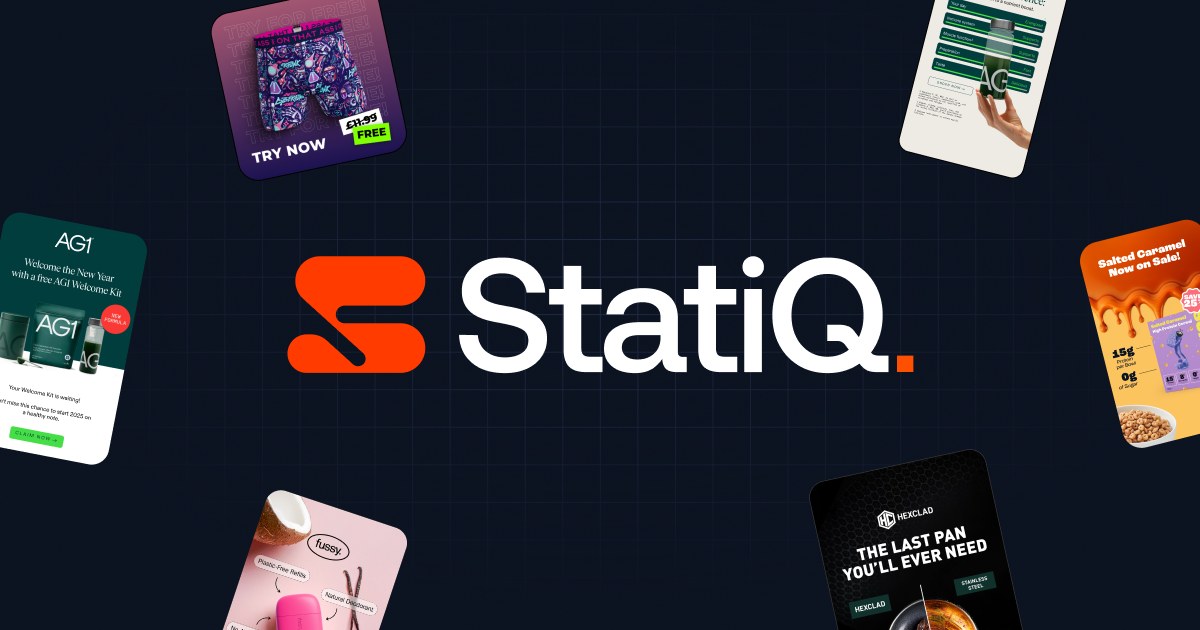
Simon Robert runs Statiq, a static-ad agency founded in Paris in 2024. This week he wrote on X that they grew to about $350k in monthly recurring revenue in 18 months by selling ad volume, 100 to 150 ads per brand. Then the models removed the production friction. Producing a static got easy, getting one to perform didn’t, and in his words “savvy marketers could now produce hundreds of ads themselves”. He says churn went up about 1.5x and they haven’t grown since January while they rebuild the model.
Those are his numbers from his own post. I couldn’t find anything outside it that confirms them, so treat them as one founder’s account.
What you can check is his site. Statiq’s About page still sells production: “We can deliver more output than in-house designers at half the price”, with “3 days for a standard design batch (10 ad concepts)” and “50K+” designs delivered. The homepage has already moved. Plans are tied to the client’s Meta ad spend, aimed at brands spending “$100K+/month”, and come with a “Dedicated creative strategist” and “Strategy calls”. There are no public prices and nothing tied to performance.
I think his story blends two different shocks, and it helps to pull them apart:
- Clients make the ads themselves. The tools got good and cheap enough that a decent in-house marketer doesn’t need an agency for volume.
- Clients want results, not assets. Even where they still buy from an agency, they want to pay for ads that win, not for a count of ads.
The first one kills a volume business outright. The second one changes what you can charge for. Most agencies will feel both.
Will AI replace advertising agencies, or just some of what they do?
Some of what they do, and the numbers so far say it’s a slow squeeze rather than a collapse.
- Gartner’s 2025 CMO spend survey (402 CMOs in North America, the UK and Europe): 22% say generative AI “has reduced their reliance on external partners for creative and strategy work”, and 39% plan to trim agency budgets. That’s Marketing Dive’s write-up; Gartner’s own release blocked our fetcher.
- A Typeface survey of 200+ marketing leaders: 60% “are spending less on agencies this year due to AI”. Typeface sells AI content software, so read that as a vendor number. The same survey also says 82% of them have AI agents “stuck in the pilot phase”, which doesn’t sound like teams that have replaced anyone yet (Agile Brand Guide).
- The WFA’s study of in-house agencies: 65% of the big advertisers it surveyed already have a creative in-house agency, the main gain so far is “faster content production”, and “ROI on generative AI appears inconsistent” (WFA).
The big holding companies don’t tell one story either. WPP’s 2025 revenue less pass-through costs fell 5.4% like-for-like, and it expects a further decline in the first half of 2026. But WPP blames its own “excessive organisational complexity”, not clients moving work to AI (WPP results). Publicis grew 4.7% organically in the first half of 2026 (O’Dwyer’s). My read is that money is moving towards whoever owns data, media buying and the platforms, but nobody has cleanly measured how much of that is AI.
Agencies themselves mostly use AI to cut their own costs. Forrester and the 4As found “nine in 10 agencies use generative AI”, 61% treat it as a “cost of business”, and only 31% plan to sell agentic AI to clients within two years (Forrester). If you bill by hours or by asset, that’s a trap: you make the thing faster and the client sees no reason to keep paying the old price.
What the ad platforms now make for you
This is the part I’d watch most closely. All of it comes from the ad platforms themselves, none of the pages lists a separate price, and TikTok calls its tools free.
| Platform | What it generates | What the page says about limits or price |
|---|---|---|
| Meta Advantage+ creative | AI variations across image, video and carousel; background generation for catalogue ads; video expansion; translation of the speech in your ads | ”Some enhancements may be turned on by default, but you can turn them off at any time.” No price on the page. Meta claims a 2-3% conversion lift from background generation on catalogue ads (Meta) |
| Meta, October 2026 | Video from static assets, generally available. Advertisers with a catalogue can now turn product images into product videos “at scale”, in beta for eligible advertisers | No price, limits or results published (Meta newsroom) |
| Google Asset Studio | Headlines, descriptions, images and videos; product scenes “with one or two product images”; horizontal or vertical video, short cut-downs and voiceover | Assets “retained for 55 days”; no price, eligibility or regions on the help page (Google Ads Help) |
| TikTok Symphony Creative Studio | Video “in minutes from minimal user input” from product details or a URL, avatars, translation and dubbing | TikTok calls them “free AI-powered tools”; output is “automatically labeled” as AI-generated (TikTok) |
Scale is real too. Meta reported in Q1 2026 that “over 8 million advertisers are now using at least one of Meta’s AI ad creative tools”, up from 4 million at the end of 2024 (PPC Land). I wrote up how Asset Studio’s video works step by step in how to make AI video ads in Google Ads.
Meta’s catalogue-to-video beta is the one that hits us. It’s aimed at the work we do: product photos in, product videos out.
Where AI ads still lose
This is the case for agencies, and it’s real, but it’s narrower than most agency blogs make it sound.
- Ipsos tested 20 ads on 3,000 US consumers (May 2026). “The human-made ads are 14% stronger on short-term effectiveness” and “17% stronger on long-term effectiveness”. The detail that matters: AI did best “on straightforward, product-driven briefs” and struggled “with storytelling, emotion, or a distinct point of view” (Ipsos, Syracuse University).
- Field data cuts the other way. A TUM working paper on 16 billion impressions found AI-made ads “can match or exceed human-made ads’ performance”, as long as they don’t look AI-made (TUM). A larger study of 300,000+ live ads found AI and human ads “statistically comparable” on click-through once matched on advertiser, campaign and day, and “ads that look synthetic are penalized, even when they’re created by humans” (Realize; Realize sells the AI ad tool used in the study). I went through the tests in more detail in do AI-generated ads work?
- Brand films are hard. McDonald’s Netherlands pulled its fully AI Christmas ad three days after launch in December 2025. The production took “Ten people, five weeks, full-time” and “thousands of takes” (eWeek). So AI brand film wasn’t cheap or fast either, and an agency made it.
Put together: AI holds up on plain product work and loses on story. That’s good news for agencies that sell ideas and story, and bad news for anyone selling plain product assets by the piece. We’re in the second group.
Why we’re in the exposed group
We make AI product video for a large online marketplace, priced by volume. The client keeps buying. But read the evidence above with our work in mind:
- It’s product-driven catalogue video, the brief Ipsos found AI handles best.
- Meta now offers catalogue product-to-video in beta, inside the ad account.
- Google’s Asset Studio makes product scenes from one or two product photos, and builds video in the same place.
If the only thing we sold was “a lot of product videos”, Statiq’s story would be our story in a year or two.
So what is the client actually paying for? I think it’s the part they can’t staff, but I don’t know that yet. Here’s what our work involves that none of the platform tools above promises on its page:
- One approval, every placement. One master gets cut for Reels and Stories, feed, square, YouTube, DOOH screens and broadcast. Each platform’s own tool generates for its own platform.
- Assets that pass review. Channel specs, safe zones, text limits and the reasons ads get rejected. None of the vendor pages publishes how often its generated assets fail ad review, and I found no one else who has measured it.
- Speed when the offer changes. Marketplaces change prices and promos weekly. New versions in days, across every format, is a pipeline job.
- Consistency across thousands of products. Getting one product right is easy. Getting every product right without the model inventing details on the packaging is the hard part; we wrote down our method in marketing/ai-product-video-fidelity.
That’s our hypothesis, not a finding. The client might tell us they renew because we’re cheaper than hiring, which would put us right back in the volume business.
How agencies are changing what they charge for
The pricing data says the shift is happening, slowly:
- The WFA asked 69 multinationals with $147bn of combined spend how they pay agencies. Paying for hours is now the main model for only 19% of them. Over 15 years, fixed-fee or output pricing went from 20% to 33%. Hours plus a performance part went from 9% to 21%. On AI, “just 20 percent have already evolved their commercial models in response to AI, although 61 percent intend to do so.” For most of them, performance pay is still under 20% of the total fee (Videoweek).
- Monks (S4 Capital) sells a subscription. One “steady, recurring fee”, compute included, where output can go from 50 to 70 pieces a month “at the same fee”. Their goal is about 25% of revenue on this model (Digiday).
- AlixPartners expects the default to become “base fee + project/sprint fees + performance fee”, because “the old hourly model breaks when AI cuts hours faster than it cuts costs” (AlixPartners).
- TubeScience, a performance creative agency, pitches it the blunt way: “the winners earn budget while misses cost the client nothing” (inBeat’s roundup).
- Clients expect the savings passed on. Digiday’s interviews with independent agencies found procurement “expecting [savings] now”, and one AI campaign cost “26% of what live shoots would have” (Digiday).
What I couldn’t find: any agency that publishes what share of its fee is at risk, or how it defines a “winning” ad. The WFA only gives aggregate shares.
What we decided
Two things, both cheap.
We ask the client. Which of our videos actually got ad spend? And could your team make those today with Asset Studio or Advantage+? If the answer is yes, I’d rather hear it now than at renewal. If the answer is “no, because of X”, then X is what we sell from now on, and it goes on the proposal by name.
The next pitch carries two price lines. One is volume, the way we price today. The other is a test package: a base fee for a set of angles and versions across every format, plus a fee tied to which ads win. Whichever one a prospect picks tells us what they think they’re buying. It’s the AlixPartners shape (base, sprint, performance) at a size a mid-market brand can sign.
The second line has a catch I haven’t solved. To charge on winners, we need to see the client’s results, and a lot of marketplaces and brands won’t share ad account data with a production partner. If they won’t, the performance part can’t be priced, and we’re back to volume with a better story.
Who this applies to, and who it doesn’t
- Agencies and freelancers selling ads by the piece (statics, UGC-style video, product video, resizes): this is you. The platforms now offer the basic version of your product inside the ad account.
- In-house teams buying production: you have more pricing power than a year ago. Use it, but check what you’d have to staff yourself before you cancel.
- Agencies selling ideas, story and brand film: the evidence is on your side for now (Ipsos), as long as the work doesn’t look AI-made.
- Media buying: a different question. The platforms are automating that too, but it’s not what this piece covers.
If you’re a brand building a large creative library for Meta, our notes on why that now means a reusable template library rather than single ads are in marketing/andromeda-era-creative-strategy, and how we got from research to 360 ad variants is a worked example.
What I’d do this week
If you run an agency that sells production:
- Pull your last three months of delivered assets for your biggest client. Ask them which ones got spend. Twenty minutes, one email.
- For each one that got spend, try to make it yourself in Google Asset Studio (the exact menu path is in our Google AI video guide) or with Meta’s Advantage+ creative options on a draft ad. Note what the tool couldn’t do: a format, a spec, a product detail it got wrong. That list is your offer.
- Write a second price line for your next proposal: a base fee plus a performance part. Decide before you send it what counts as a winning ad (for example, an ad that gets more than a set share of the ad set’s spend after a week).
If you buy production from an agency:
- Ask your agency the same question back: which of your outputs got spend, and which could we make ourselves now?
- Before you cut them, list what you’d have to staff: formats, review rejections, turnaround on offer changes.
- Ask for a quote with part of the fee tied to winners and see how they answer.
Sources
- Statiq homepage and About page
- Simon Robert on X
- Gartner 2025 CMO spend survey, via Marketing Dive
- Typeface survey, via Agile Brand Guide
- WFA: how AI is changing in-house agencies
- WPP 2025 preliminary results
- Publicis H1 2026, O’Dwyer’s
- Forrester and 4As on agency AI use
- Meta Advantage+ creative
- Meta newsroom, Advertising Week 2026
- Google Ads Help: Asset Studio
- TikTok Symphony Creative Studio
- Meta Q1 2026 AI creative tool adoption, PPC Land
- Ipsos: AI vs human ads
- Syracuse University on the Ipsos study
- TUM: AI in disguise
- Realize: AI ads and cost efficiency
- McDonald’s Netherlands pulls AI Christmas ad, eWeek
- WFA agency pay study, Videoweek
- Monks subscription model, Digiday
- AlixPartners on agency pricing
- inBeat: performance creative agencies
- Digiday: how indie agencies charge for AI work